
Hido · 緋銅
Copper that turns red
Hido is an old Japanese technique that turns copper a deep red. We make each ring by hand, one at a time.
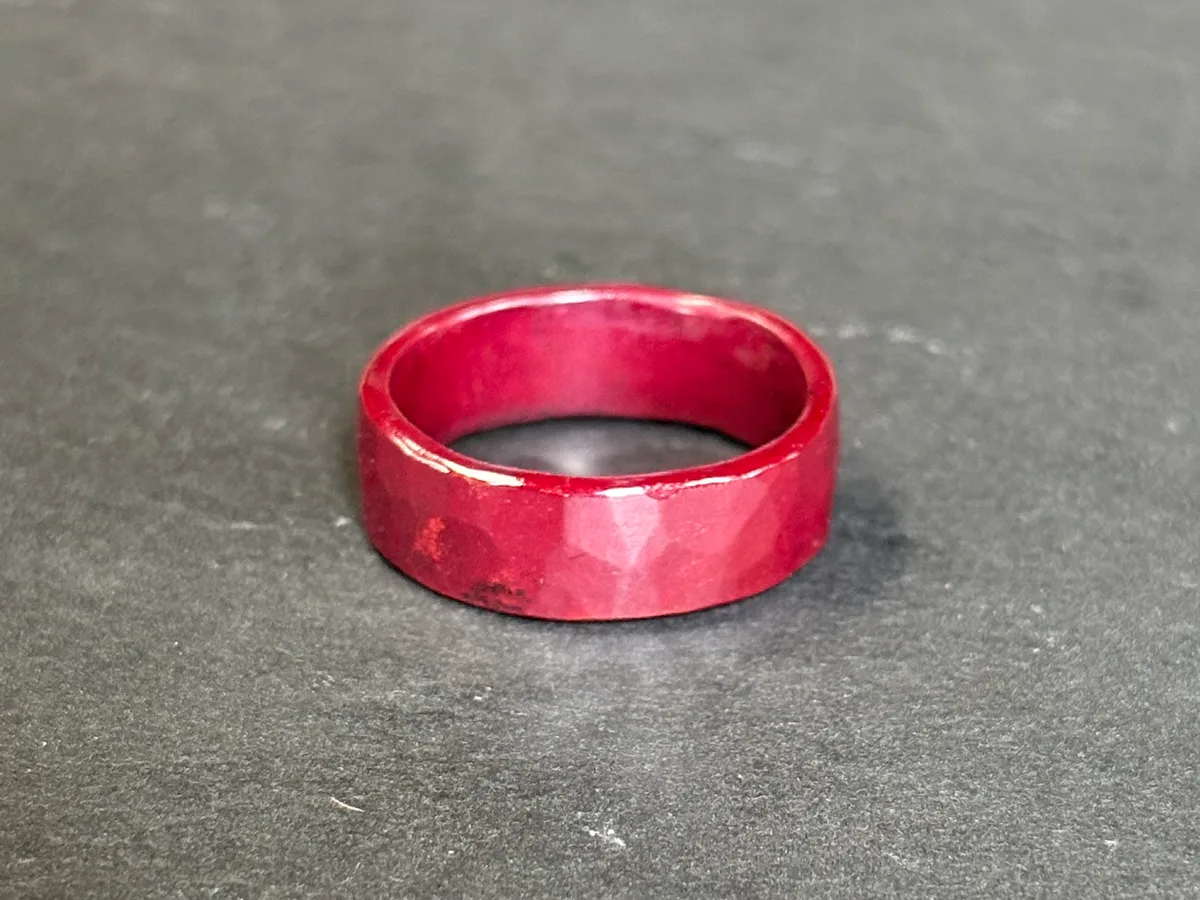
Not paint. Not plating.
Hido (緋銅) is a Japanese metalworking technique said to date from the Edo period. Hi (緋) is the word for a deep, slightly muted scarlet; do (銅) is copper.
The copper is heated close to its melting point — around 1,000 °C — then quenched in a solution of chemicals. This leaves a thin red oxide film on the surface. The red is not a coating: it is the surface of the copper itself, changed.
Heat, temperature, timing and the strength of the solution all change the colour and the unevenness of the result. Some rings lean bright red, others sink towards purple, and the same ring looks different in daylight and under indoor lights.
How a hido ring is made
- 01
Shaping
We form the ring from a copper bar. Width, thickness and whether the surface is hammered or smooth are decided here.
- 02
Preparing the surface
The surface is smoothed and polished before colouring. Anything left on it — a missed spot, a trace of oil — shows up in the finished colour.
- 03
Heating
We bring a flame to the copper. This is the hard part of hido.
- 04
Watching the colour
As the copper heats, its surface changes colour. We judge the temperature by eye. That judgement is everything.
- 05
Quenching
The moment the flame is taken away, the copper goes into the solution — the longer hot copper meets the air, the more likely it turns black. The liquid boils, the bubbles stop, there is a moment of stillness, and then it turns red.
Why it is difficult
Even when we make two rings the same way, they never come out the same. We cannot repeat the heating exactly: the angle of the flame, how long it stays, the thickness of the copper, where the heat travels first. A wrong temperature turns the copper black, or melts the surface into a rough finish — and that ring is discarded.
There is a second problem. Heat softens copper, so a freshly coloured ring is far too soft to wear. The metal has to be hardened again without harming the coloured surface. This is the step we take the most care over.
What to expect from a hido ring
One of a kind
Colour and unevenness differ from ring to ring. In person the red has more depth than in photographs.
It ages
The red film is delicate. With wear and knocks it slowly rubs away, and the copper beneath shows through — the ring ages like an antique.
Not for everyone
Unevenness, light flaking and small bumps are hard to control and part of the character. Please choose a hido ring only if you are happy to accept them. Because each ring is unique, we cannot exchange them; for damaged or defective items, see our returns policy (Japanese).
Hido rings in our Japanese shop now
27 rings are in stock, each a one-of-a-kind piece in a fixed size, shown here as an approximate Japanese size (for example “about JP 9”). One photo per size is shown. Prices run ¥8,000–¥9,000 (yen, Japanese consumption tax included).
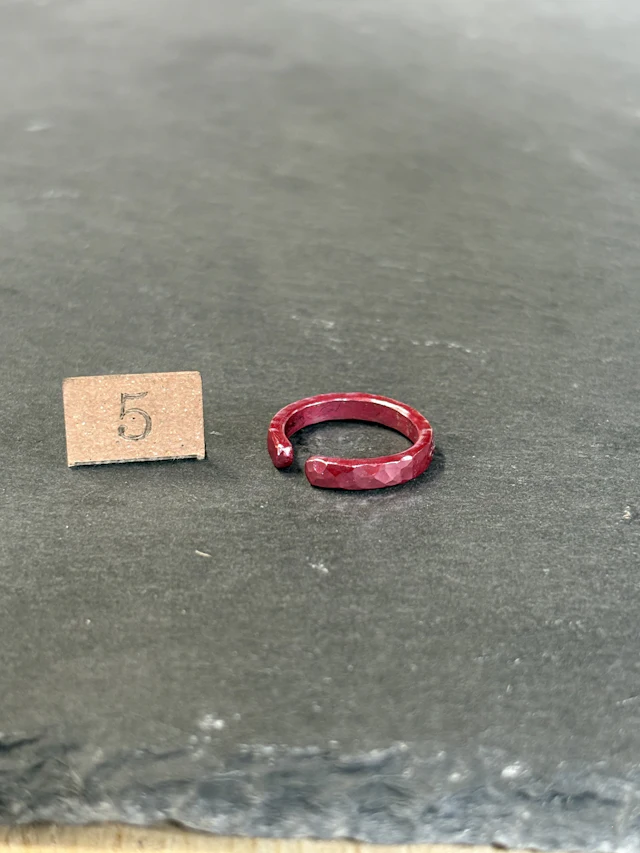
About JP size 5
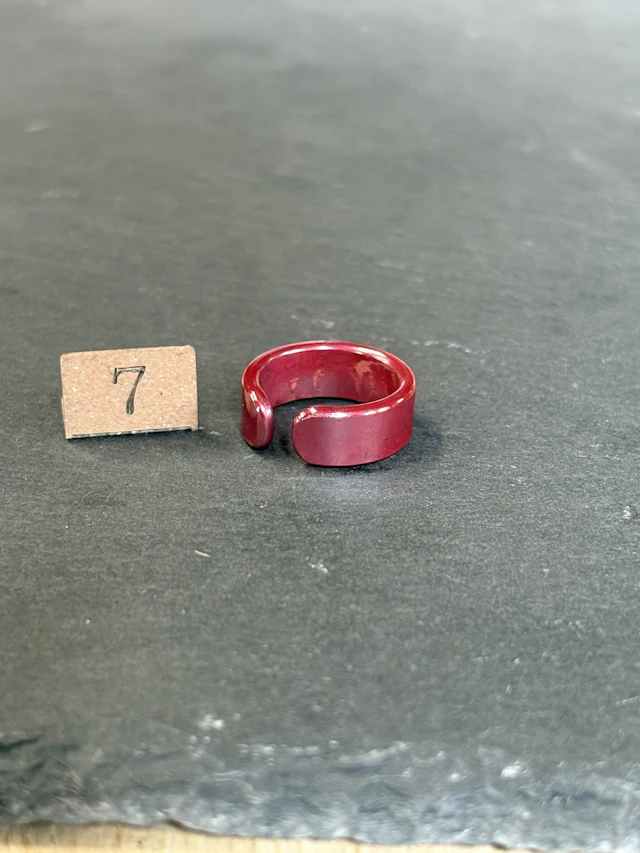
About JP size 7
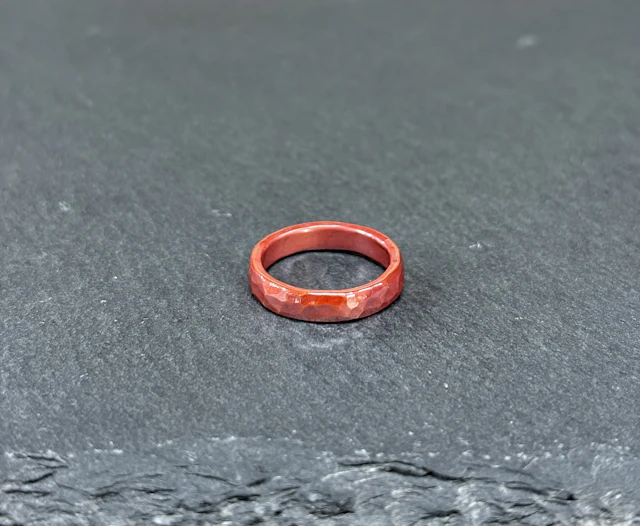
About JP size 9
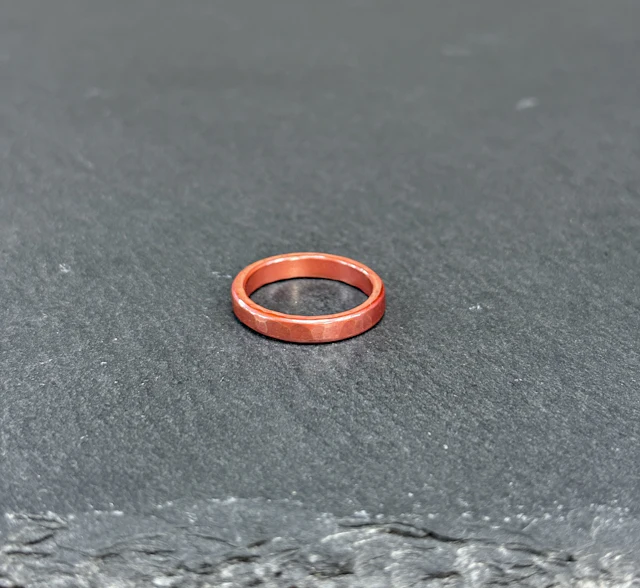
About JP size 11
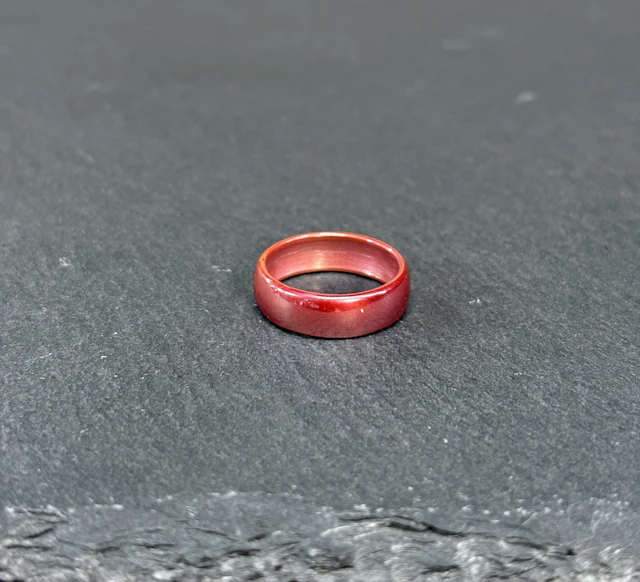
About JP size 13
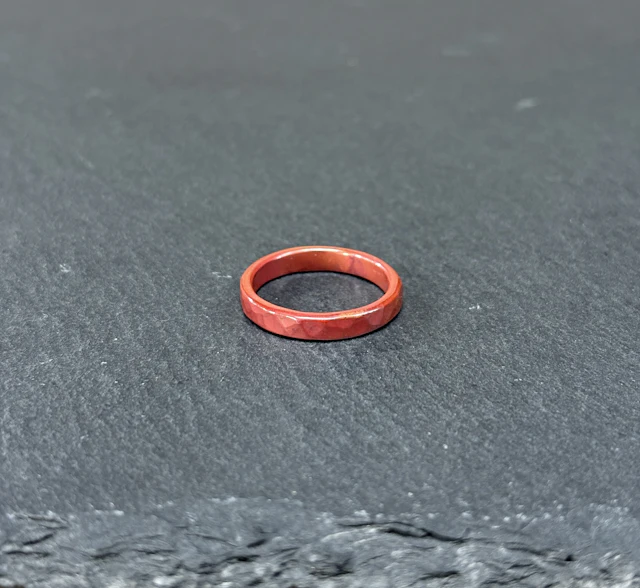
About JP size 15
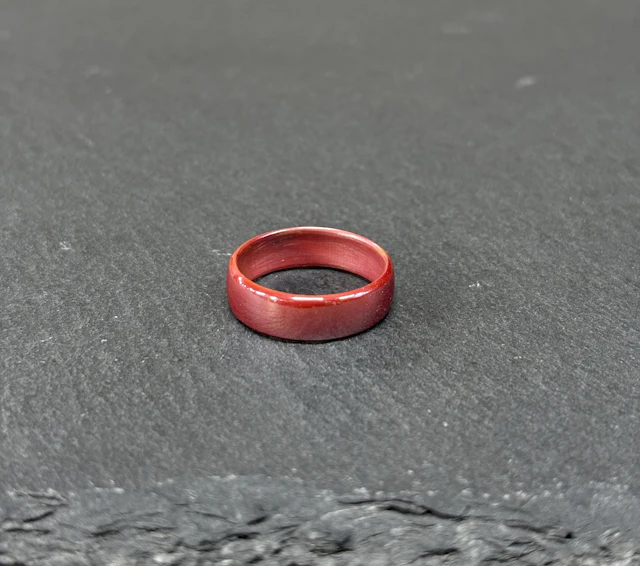
About JP size 17
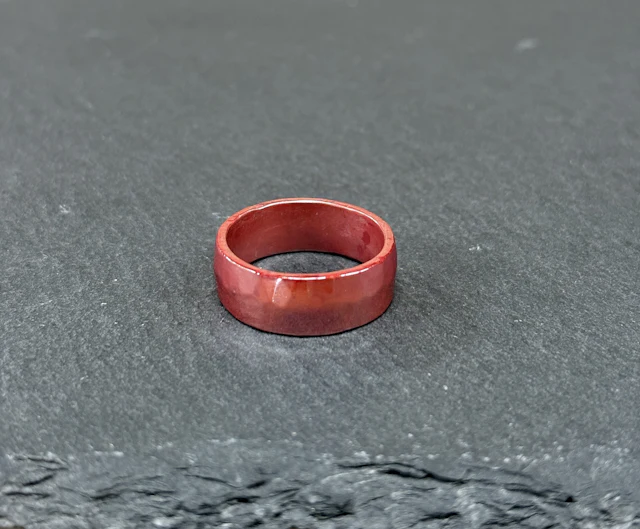
About JP size 19
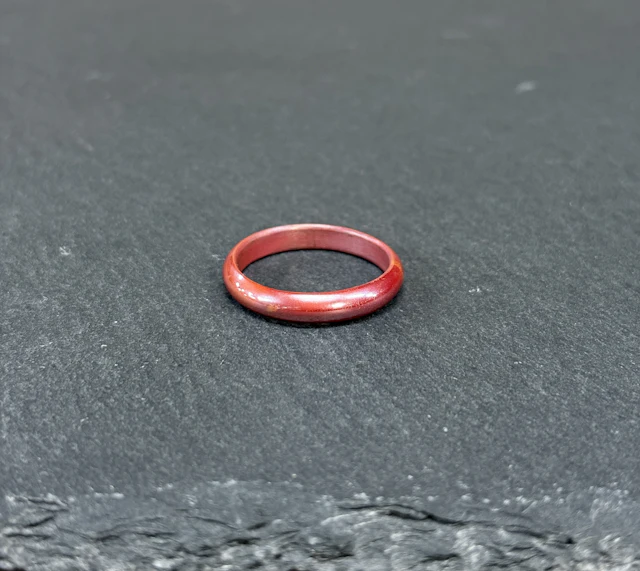
About JP size 21
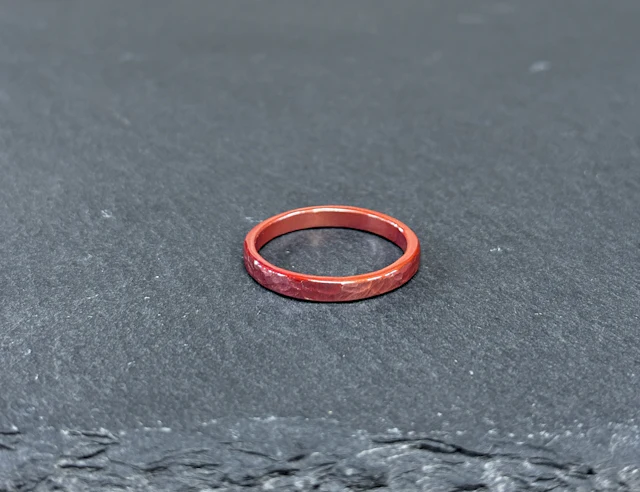
About JP size 23
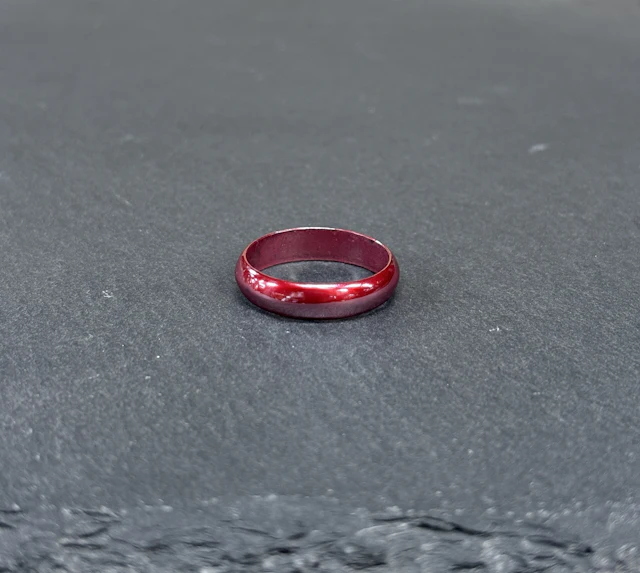
About JP size 25
Our online shop is in Japanese and ships within Japan. If you live outside Japan, please write to us before you order.
Measure with paper and a pen
Japanese ring sizes (号, go) are roughly the inner circumference in millimetres minus 40 — a size 9 is about 49 mm. Instead of converting, just measure and tell us the number.
- 01
Cut a strip of paper
Use paper that does not stretch — copy paper or a receipt — about 5 mm wide and 10 cm long.
- 02
Wrap it round your finger
Wrap it round the base of the finger you will wear the ring on: snug, but loose enough to slide over the knuckle. Mark where the paper overlaps with a pen.
- 03
Measure to the mark
Unwrap the strip and measure from the end to the mark with a ruler, in millimetres. That is the inner circumference. Send us the number as it is.
Fingers swell during the day, so measure two or three times and send the average. A wide band can fit better a little larger than a thin one.
Start with a quick message
Consultations and quotes are free. We usually reply within 24 hours (Japan time).
Questions about rings and sizes
“Is there a hido ring in my size?” “I don’t know how to measure my finger.” For questions like these, email is easiest — tessai.works.official@gmail.com. You can send photos too.
Email us※ Please include your country and, if you know it, the inner circumference of your finger in mm
Custom furniture & fixtures
Store fixtures, signs and large furniture, built from scratch to fit your space. A photo of the place or a rough sketch makes the quote smoother.
Ask for a quoteSee how custom orders work →